The Financial Influence of E-Waste Recycling: Employment, Innovation, and Sustainability
E-waste recycling presents numerous economic opportunities, influencing job creation and technological advancement. As the global demand for e-waste management grows, communities are positioned to gain from greater employment opportunities and innovative solutions. Furthermore, this sector plays a pivotal role in promoting environmental sustainability. However, the complexities of effective e-waste recycling raise important questions about policy support and community involvement. Which approaches can strengthen these initiatives and amplify their overall impact?
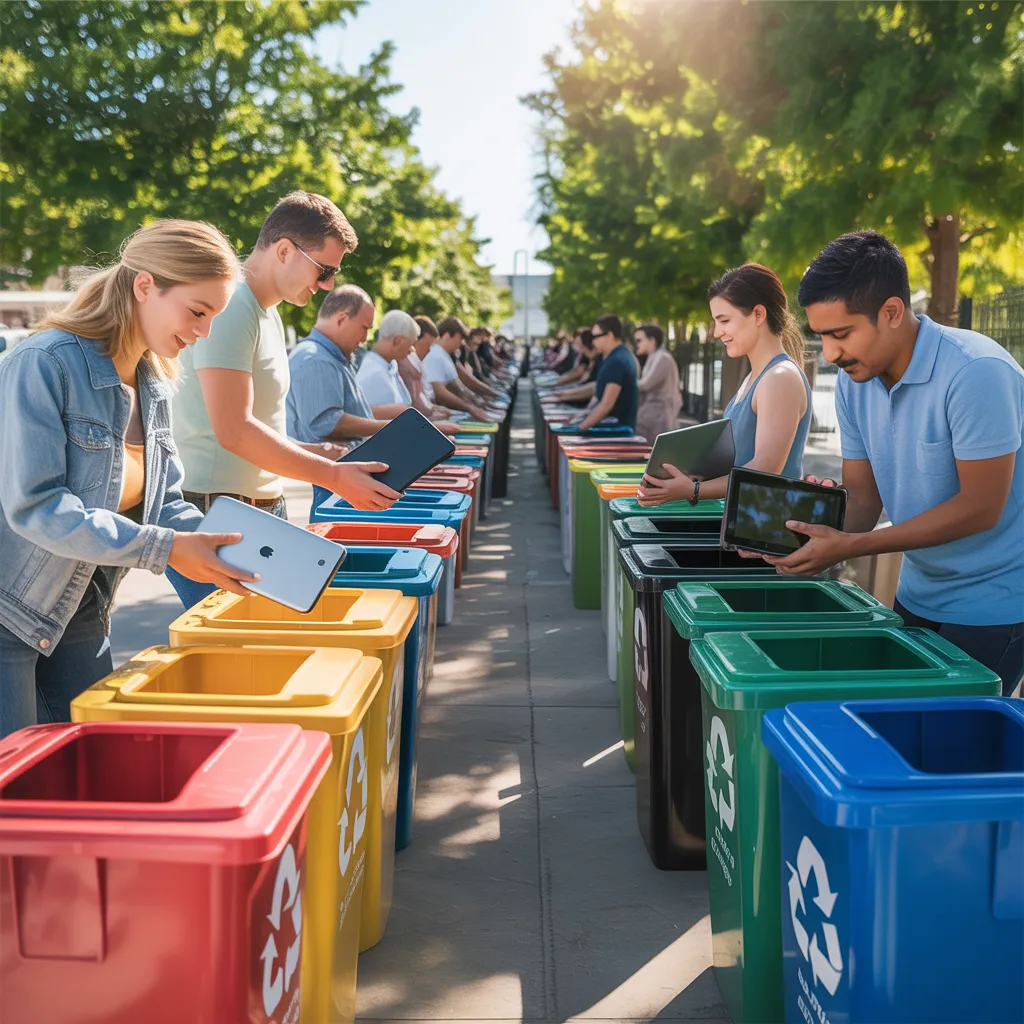
The Growing Challenge of Electronic Waste: Comprehending the Issue
As technology continues to advance rapidly, the challenge of electronic waste, commonly referred to as e-waste, has grown into a major global crisis. Millions of tons of discarded electronics, such as smartphones, computers, and appliances, are generated annually, leading to the deterioration of the environment. Many consumers are unaware of the dangerous substances found within these devices, including mercury, cadmium, and lead, which can seep into the soil and water supply, creating significant health hazards.
The incorrect disposal of electronic waste often leads to informal recycling practices, where unregulated workers break down equipment without adequate safety measures. This not only worsens the health hazards but also weakens productive recycling endeavors. Globally, only a fraction of e-waste is recycled appropriately, highlighting a critical gap in awareness and infrastructure. Resolving this challenge necessitates a collaborative effort from governments, industries, and consumers to advance responsible disposal practices and strengthen recycling infrastructure, ensuring a more sustainable future.
Economic Benefits: How E-Waste Recycling Creates Jobs
E-waste recycling considerably contributes to job creation, with data revealing an increase in employment opportunities in this sector. It also promotes professional development, offering professionals critical skills in technology and environmental management. Furthermore, the expansion of recycling centers can boost local economies, encouraging investment and fostering community growth.
Job Creation Statistics
The recycling of electronic waste is capable of creating thousands of jobs throughout different fields. A report from the Global e-Sustainability Initiative suggests that for every role established in e-waste recycling, a minimum of 1.17 more jobs are generated in related industries, including logistics and manufacturing. Moreover, the U.S. Environmental Protection Agency anticipates that enhancing recycling activities may generate roughly 1.17 million new positions by 2030. These opportunities extend from collection and processing to refurbishing and reselling refurbished electronics. Beyond this, community economies are strengthened as these roles commonly provide wages exceeding the minimum while fostering community involvement. As a result, the e-waste recycling sector serves as a significant driver of employment, promoting sustainable practices while addressing environmental concerns.
Skill Development Opportunities
Investing in e-waste recycling not only resolves environmental challenges but also fosters substantial skill development prospects. The field demands a diverse range of skills, from technical expertise in dismantling electronic devices to knowledge of environmental regulations. Workforce development programs can arm workers with essential skills, enhancing their employability in a rapidly expanding industry. Additionally, alliances with academic organizations can enable practical training opportunities, bridging the gap between theoretical understanding and hands-on practice. As workers develop expertise in areas such Read on as device maintenance, information retrieval, and toxic substance management, they support a more green economy. In the end, these professional development efforts uplift participants while advancing the overall growth and progress within the e-waste recycling sector.
Local Economic Advancement
Processing e-waste simultaneously strengthens skill development and accelerates regional economic expansion by producing many new job prospects. The e-waste recycling industry demands a varied labor pool, including technical specialists and logistics professionals, thereby generating employment across various skill levels. Local businesses benefit from increased demand for solutions involving e-waste gathering, handling, and redistribution of reconditioned goods. This dynamic cultivates entrepreneurial spirit, as innovative enterprises develop to address the increasing requirements of the field. Moreover, the financial boost produces increased tax revenues for city administrations, enabling reinvestment in community services. With sector growth comes greater innovation in waste processing technologies, reinforcing community economic durability and environmental responsibility. In summary, electronic waste recycling acts as a powerful driver of broad regional economic development.
Advanced Technologies Revolutionizing E-Waste Recycling
Cutting-edge technologies are revolutionizing the e-waste recovery field through advanced separation techniques and automation. These breakthroughs strengthen efficiency and accuracy in retrieving high-value materials from end-of-life electronics. The integration of robotics further streamlines processes, decreasing staffing costs and sustainability concerns.
Expert Separation Techniques
Transforming the e-waste recycling industry, advanced separation techniques harness innovative technologies to efficiently extract valuable materials from discarded electronics. Methods including hydrometallurgy, pyrometallurgy, and advanced mechanical processes enable recyclers to recover metals like gold, silver, and copper with remarkable exactness. In addition, the use of sensor-based sorting systems allows for the rapid identification of various materials, enhancing the accuracy of separation. These technologies not only minimize waste but also considerably diminish the environmental impact associated with standard recycling practices. By maximizing the recovery of valuable materials, advanced separation techniques contribute to a circular economy, advancing sustainability and resource conservation. Ultimately, these innovations enhance the economic viability of e-waste recycling, creating job opportunities while nurturing innovation in the sector.
Integration of Automation and Robotics
Incorporating automated technologies and robotics into electronic waste processing redefines the efficiency and effectiveness of resource recovery. Automated technologies can quickly detect and categorize diverse materials, greatly reducing human labor and reducing manual errors. State-of-the-art robotic systems equipped with intelligent algorithms enhance the exactness of breaking down complex electronics, enabling higher recovery rates of high-value components such as precious metals and circuit boards. Such technological incorporation not only speeds up the e-waste recycling process but also reduces operating costs, rendering e-waste recycling more economically viable. Moreover, automation enables safer working environments by decreasing human exposure to hazardous materials. As these technologies evolve, they stand to accelerate progress in recycling approaches, contributing to a highly sustainable framework to e-waste management and resource recovery.
How E-Waste Recycling Supports Sustainability
As electronic waste continues to accumulate globally, the importance of recycling emerges as a essential solution for promoting sustainability. Recycling electronic waste reduces environmental damage by diverting hazardous materials from landfills, thereby decreasing the pollution of soil and water sources. By reclaiming valuable metals and components, recycling supports the conservation of natural resources, reducing reliance on raw material extraction. This process not only lowers energy consumption but also reduces greenhouse gas emissions linked to the production of new goods.
Furthermore, e-waste recycling fosters a circular economy, facilitating the repurposing of resources and maximizing the longevity of electronic equipment. This movement helps to address the harmful consequences of accelerated tech development and consumer-driven waste. As companies and neighborhoods commit to e-waste recycling, they work toward a greener tomorrow, strengthening the health of our ecosystems while promoting responsible consumption practices. As a result, e-waste recycling proves to be a fundamental pillar in the quest for environmental responsibility in a technology-driven modern era.
How Regulations Can Help E-Waste Recycling Efforts
The achievement of e-waste recycling efforts relies heavily on the establishment of comprehensive policies. Governments play a vital role in developing regulatory guidelines that support responsible disposal and recycling of electronic waste. Policies such as extended producer responsibility (EPR) can incentivize manufacturers to create products that prioritize ease of recycling, consequently decreasing the volume of e-waste produced. Furthermore, monetary incentives for recycling initiatives can reduce obstacles for consumers and organizations, promoting greater involvement in recycling activities.
Furthermore, public awareness campaigns supported by legislative measures can help communities understand about the ecological and economic advantages of electronic waste recycling. Implementing defined standards for e-waste collection and processing can boost operational efficiency and ensure that hazardous materials are handled safely. By building a coherent legislative environment that prioritizes e-waste recycling, policymakers can stimulate job creation, encourage progress in sustainable recycling methods, and promote environmentally responsible economic growth.
Collective Community Actions That Strengthen E-Waste Recycling's Financial Impact
Community efforts considerably enhance the financial influence of e-waste recycling by encouraging community involvement and awareness. Programs such as neighborhood gathering drives and educational workshops not only encourage residents to recycle but also develop a sense of mutual commitment. Community groups frequently collaborate with recycling firms, improving availability and ease of access for residents.
In addition, such grassroots initiatives can generate jobs, from collection and sorting to handling electronic waste. By encouraging environmentally responsible approaches, neighborhoods can strengthen local financial ecosystems while decreasing environmental dangers linked to inadequate waste management.
Moreover, community outreach initiatives can stimulate innovation by bringing attention to emerging recycling technologies, empowering local entrepreneurs to explore new business opportunities within the e-waste recycling space. At its core, community engagement generates a powerful ripple effect, magnifying the economic benefits of electronic waste recycling and contributing to a greener tomorrow.
Commonly Asked Questions
What Personal Items Qualify as E-Waste for Recycling?
Personal items that qualify as e-waste for recycling include old smartphones, laptops, tablets, televisions, printers, and other electronic devices. In addition, batteries and charging devices are classified as e-waste and ought to be recycled in an environmentally responsible manner.
How Can Individuals Properly Dispose of Their E-Waste
Users can properly dispose of e-waste by identifying approved recycling drop-off points, joining neighborhood recycling initiatives, or using brand-sponsored return programs. Ensuring secure data removal before disposal is essential for personal information protection.
Are There Health Risks Associated With E-Waste?
Absolutely, e-waste presents significant health risks. Exposure to dangerous chemicals, such as lead and mercury, can lead to significant health issues, including breathing difficulties, nerve damage, and elevated cancer susceptibility, particularly for employees working in unsafe disposal conditions.
What Are the Environmental Consequences of Improper E-Waste Disposal?
Improper e-waste disposal leads to the contamination of soil and water, damaging ecosystems. Hazardous materials, including heavy metals, seep into the environment, posing risks to wildlife and human health while furthering extensive environmental deterioration.
How Can Businesses Participate in E-Waste Recycling Initiatives?
Businesses can participate in e-waste recycling initiatives by collaborating with accredited recycling facilities, establishing product return initiatives, raising awareness among staff and clients, and adopting eco-friendly solutions that support proper waste management and material reclamation from discarded electronics.